Lumens explained: how much light do you really need?

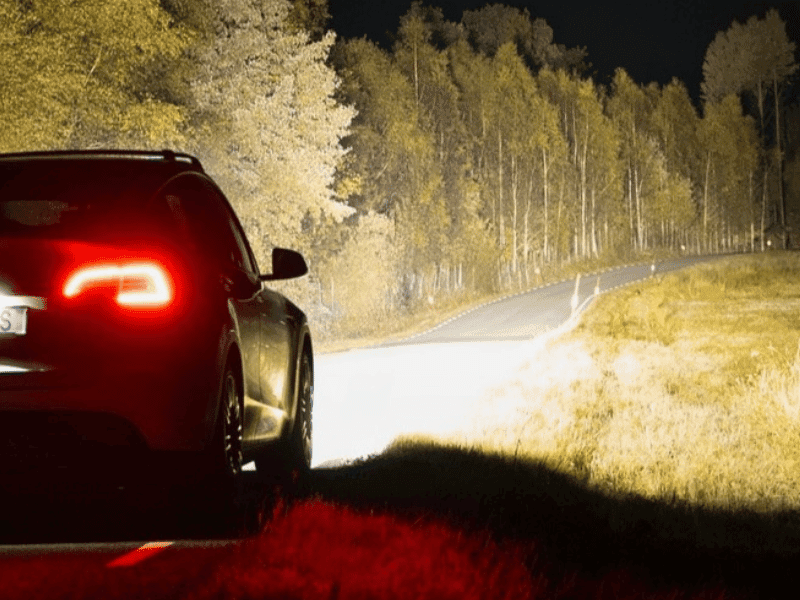
When you buy an LED bar, work light, or spotlight, you almost always see the number of lumens in the product specifications. But what does that number actually say? Does more automatically mean better light? And how many lumens do you really need for your vehicle?
In this blog, we explain what lumens are, why they’re important, and what to look for when choosing the right lighting. This makes it easier to make the right choice without just staring blindly at the highest number of lumens.
What are lumens?
Lumens (lm) indicate how much visible light a lamp produces. The higher the number of lumens, the more light a lamp emits.
Yet this doesn’t say everything about a lamp’s performance. The light beam, reflector, lens technology, and color temperature also determine how much light actually ends up on the road.
Do more lumens always mean better light?
No.
A lamp with more lumens often seems more powerful on paper, but that doesn’t automatically mean you can see further or better. The way the light is distributed plays a major role.
A well-designed LED bar with slightly fewer lumens can perform better in practice than a lamp with a higher number, simply because the light is focused more efficiently.
That’s why it’s wise to look not only at the number of lumens but also at other properties of the lamp.
Theoretical and effective lumens
With LED lighting, you sometimes come across two different lumen values:
- Theoretical lumens: the maximum light output that the LED’s can deliver under ideal conditions.
- Effective lumens: the actual light output you can expect during use.
Due to heat, electronics, and optics, the effective light output is almost always lower than the theoretical value. Therefore, always check which value a manufacturer lists.
How many lumens do you need?
That depends on the application. Small interior lighting obviously needs less light than a powerful LED bar on a truck
| Application | Guideline lumens |
| Interior lighting | 200 – 800 lm |
| Marker light | 50 – 300 lm |
| Work light | 1,500 – 3,500 lm |
| Verstraler | 3,000 – 8,000 lm |
| LED bar | 3,000 – 15,000+ lm |
These are general guidelines. The ideal light output varies per vehicle and application.
Look beyond just lumens
When choosing lighting, several properties are important.
For example, also pay attention to:
- the quality of the light pattern;
- the color temperature (Kelvin);
- the IP rating;
- the ECE approval;
- the quality of the housing and electronics.
It’s precisely the combination of these properties that determines how well a lamp performs in practice.
Our experience
At All Day Led, we notice that many customers look at the number of lumens first. We understand that, as it’s an important indicator of light output.
However, we always advise looking beyond just this number. A good light pattern, high-quality materials, and the right adjustment ultimately ensure that you see further, have better visibility, and are safer on the road.
That’s why we test our lighting not only on specifications but also in practice.
In summary: lumens indicate how much visible light a lamp produces. However, the number of lumens alone doesn’t determine how well a lamp performs. The light pattern, reflector, color temperature, and the quality of the lamp also play an important role.
Therefore, always look at the complete picture and choose lighting that suits your vehicle and use.
At All Day Led, you’ll find LED bars, spotlights, and work lights with high light output and an excellent light pattern. This way, you don’t just choose a lot of light, but also quality, reliability, and safety.